
Gelco Chimney Sweep in Boca Raton: A Homeowner’s Guide
When a contractor says they’ll “seal your chimney,” that phrase covers everything from a $12 hardware store spray to a Gelco-grade elastomeric compound designed to flex with masonry through heat cycles. You won’t know the difference until the cheaper one fails, usually two summers later, usually as a stain spreading across the ceiling of a room you just painted. This guide explains what Gelco products actually do inside a Boca Raton chimney, so you can ask better questions and spot a vague answer before work begins.
If you’d rather not sort through product labels yourself, call (877) 685-2248. We’ll tell you exactly what we found and what it needs.
What does “Gelco” actually mean on a chimney estimate?
Gelco is a professional-grade line of masonry and chimney sealants: elastomeric waterproofing coatings, crown and joint repair compounds, and flexible sealants built for the thermal cycling a chimney goes through. You will not find these products on a shelf at a big-box store. They’re sold through professional supply channels to contractors who know what a substrate is and why it matters. That’s the whole point of naming one on a bid.
Here’s what that means practically. A chimney in Boca Raton takes real heat from the sun on its south and west faces, then cools overnight, then does it again tomorrow. Masonry moves through all of that. A coating that cures hard and brittle cracks at the first real swing in temperature. A properly formulated elastomeric product stays flexible and moves with the brick instead of fighting it.
So when a contractor lists Gelco, it’s a signal they buy through professional supply channels rather than grabbing whatever’s closest at the register. It doesn’t guarantee good work. It does tell you they’re working with materials specified for chimneys instead of general-purpose caulk.
What are Gelco products used for in chimney work?
Three jobs, mostly: waterproofing, joint repair, and crown coating. Each one solves a different problem, and mixing them up is how homeowners end up paying for a surface coat that hides a deeper issue for a season or two.
- Waterproofing. A breathable elastomeric coating goes on the exterior masonry to shed rain while letting moisture inside the chimney escape as vapor. A non-breathable sealer traps that moisture, and trapped moisture in masonry is how spalling starts.
- Joint repair. Gaps between the crown and the flue, cracks at the flashing line, and open mortar joints get filled with a flexible compound made to bond to masonry and stay bonded through heat cycles.
- Crown coating. The crown is the concrete cap on top. A proper Gelco crown coat seals its surface and ties its edges closed so water runs off instead of running in.
None of this touches the inside of the flue. Interior problems call for different materials entirely, which is where chimney repair work with HeatShield resurfacing or a DuraFlex liner comes in.
What questions should you ask before a contractor seals your chimney?
Ask four specific questions and listen for specific answers. If you get a shrug or a word salad, that’s your answer.
- “Which product, and what’s it rated for?” The reply should be a brand and an application type: elastomeric masonry coating, crown repair compound, flexible joint sealant. “Good stuff” is not a product.
- “Is it breathable?” Exterior masonry coatings should let vapor pass. If they can’t say, they may be planning to trap moisture in your brick.
- “Are you repairing the substrate first or coating over it?” This is the big one. More on it below.
- “What does the job look like when it’s done, and how long should it last?” A contractor who’s done the work knows what the finish should look like and roughly what lifespan to expect.
In our experience, the follow-up question that separates real specialists from generalists is simple: ask them to walk the chimney with you after the work and point at what they did. A person who used the right product is happy to. A person who sprayed a can of something is going to change the subject.
Surface coat versus substrate repair: why this distinction matters
A coating over damaged masonry is a roof over a broken wall. It can look fine from the ground and fail from underneath. Proper work means repairing the substrate first: raking out crumbling mortar, filling voids with a professional-grade repair compound, rebuilding spalled edges of the crown, and only then applying the seal.
This is where a lot of cheap jobs go wrong. You cannot caulk a chimney back together. If the crown has an actual crack running through it, filling the crack is a repair. Painting over the crack is decoration. If the mortar joints are soft and receding, repointing comes before sealing, not after. Ask directly which step comes first on your chimney. The answer tells you whether you’re hiring a repair or a paint job.
We’ve seen this play out in Boca Raton more than once: a homeowner pays for a “seal” that lasted one rainy season, then pays again for the actual repair. Getting the order right the first time is cheaper than doing it twice.
What should a finished Gelco crown coat look like, and how long should it last?
A proper crown coat should look uniform, with no thin patches, no visible drips, and no gaps where the crown meets the flue. The edges of the crown should be closed and slightly rounded over, not left square and open. The whole surface should shed water in a sheet rather than pooling in low spots.
How long it lasts depends on sun exposure, how much the crown moves, and whether the substrate was prepped before coating. A correctly applied professional-grade system on a sound, properly repaired crown gives you years of service before it needs attention again. A thin coat slapped onto a cracked, chalky crown gives you one or two rainy seasons at best. Florida sun is not gentle on a compromised surface.
One check you can do yourself, safely from the ground: after heavy rain, look at the top of the chimney with binoculars. Standing water on the crown, or dark streaks running down the exterior masonry, mean water is getting somewhere it shouldn’t. Don’t climb up to investigate. A chimney is a fall hazard and the flue is a confined space. That inspection belongs to someone trained and equipped for it.
Why professional-supply brands aren’t at the hardware store
Big-box retailers stock products that sell quickly to a broad audience. Professional chimney supply lines like Gelco, along with liner and venting brands such as DuraFlex, Olympia Chimney, Famco, and Copperfield, are sold to contractors who’ve been trained on what each product is for and what surface it bonds to. That distribution channel is a quality-control filter.
It also means the materials are specified for the job. A general-purpose masonry sealer is formulated for a wall. A chimney is not a wall. It’s a hot, moving, water-attracting structure with a fire inside it. The products that work on it are designed for those conditions, and part of what you’re paying a specialist for is knowing which one goes where.
This is a big part of why we keep a curated roster of professional brands on hand, HeatShield and DuraFlex included, so the repair that gets diagnosed is the repair that gets done with the right material.
When to call a pro (and when it can safely wait)
Call a professional when you see water staining on interior ceilings or walls near the chimney, when mortar is crumbling or bricks are flaking, when the crown has a visible crack, or when it’s been a while since the flue was cleaned and inspected. Those are the situations where the materials matter and the diagnosis has to be right.
What can safely wait? A cosmetic stain on exterior masonry that isn’t growing, or a slightly weathered crown with no visible cracks. Honest answer: not every chimney needs work this season, and we’ll say so when that’s the case. Nothing gets recommended without camera evidence you can see for yourself.
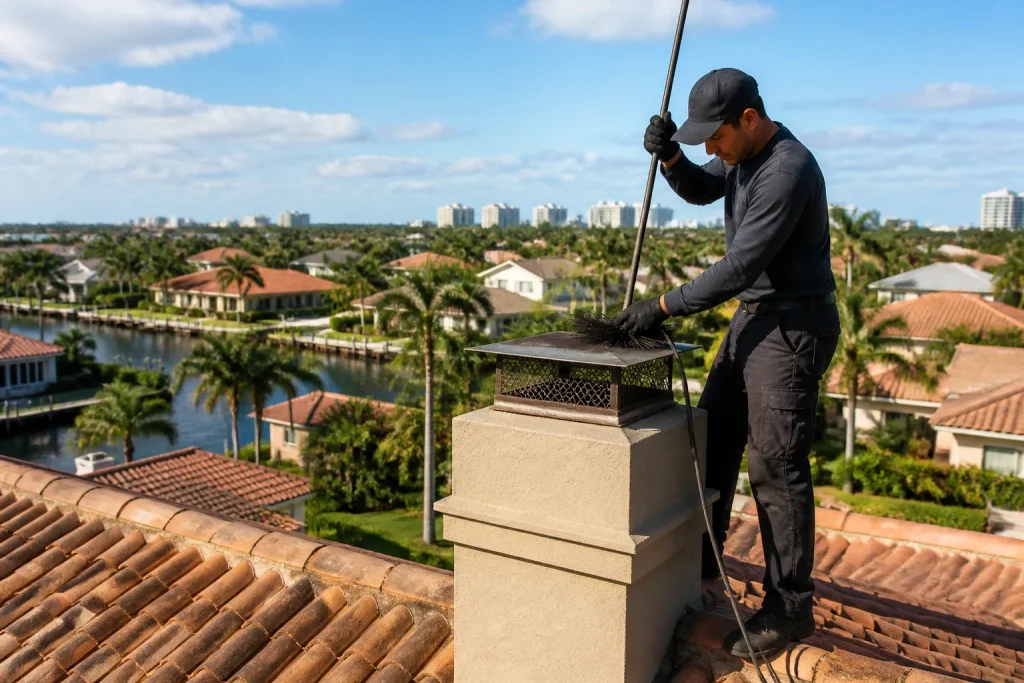
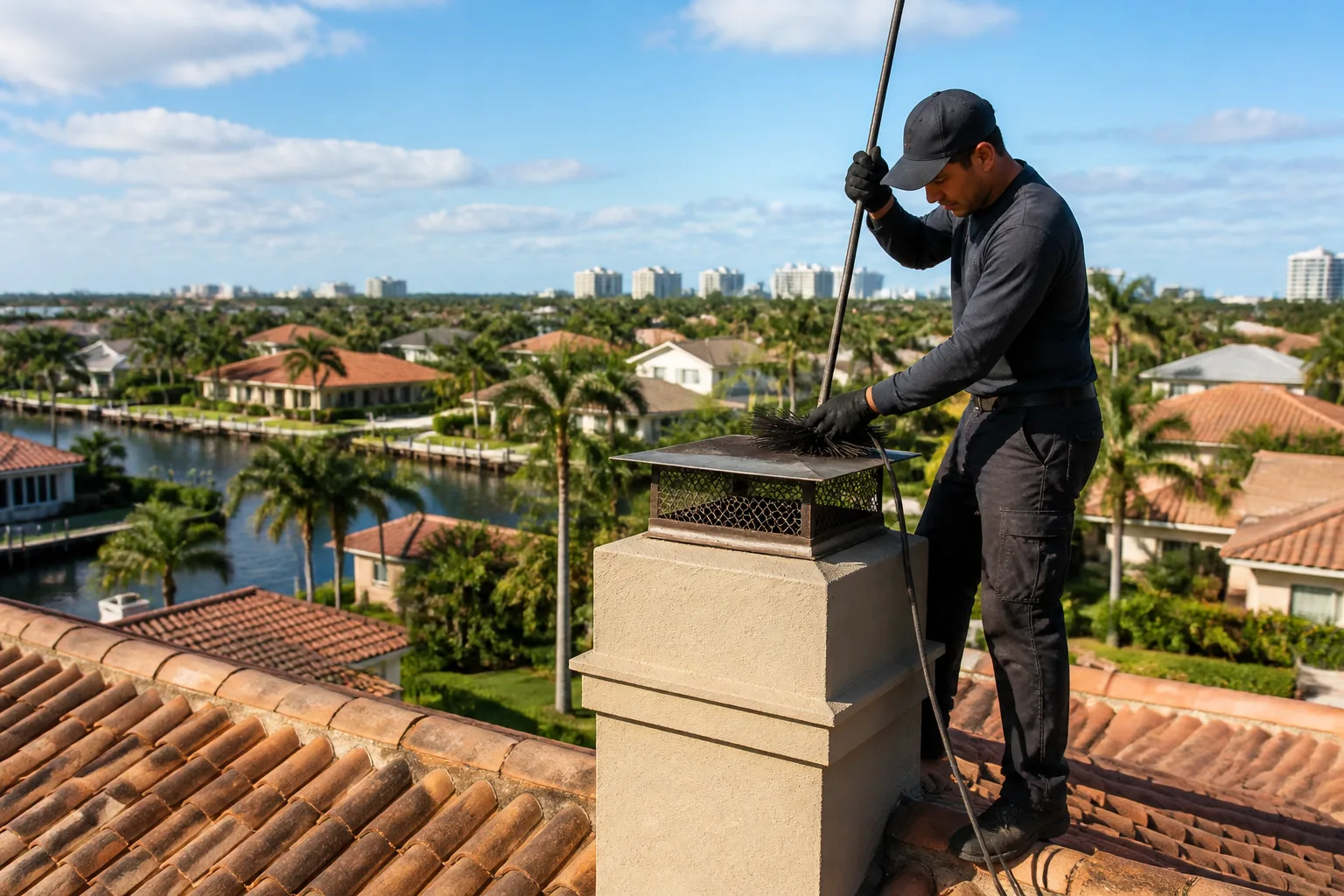
If you’re in Boca Raton and want a straight answer about your chimney’s condition, start with a chimney sweep and inspection. You’ll get a written report of what we found before any repair is discussed. Our technicians have up to 14 years of experience, and the inspection is structured to identify specific deficiencies, not to build a sales pitch.
Related services in Boca Raton: chimney sweeping, chimney inspection, and chimney repair. If you’re not sure which one you need, start with the inspection.
The Bottom Line
Gelco is a name worth recognizing because it tells you the contractor is using professional-grade materials specified for chimneys, not general-purpose sealant from a hardware aisle. But the brand name alone isn’t the point. The point is the order of work: repair the substrate, then seal it, using a product that’s rated for masonry that moves with heat. Ask which product, ask about breathability, ask whether the substrate gets fixed first. The answers will tell you everything.
If you’re in Boca Raton and need help, Chimney Sweep Boca Raton offers free estimates. Call (877) 685-2248. We answer 24/7, with fast dispatch from 7am to 7pm, Sunday through Friday. You can also start with the main Chimney Sweep Boca Raton page to see how a sweep and inspection work together.
Frequently Asked Questions
Gelco products are used for exterior chimney waterproofing, joint and crown repair, and crown coating. They’re professional-grade elastomeric and masonry compounds designed to flex with the chimney through heat cycles rather than cracking. They protect the outside of the structure. Interior flue problems call for different materials. Call (877) 685-2248 for an exact quote on your chimney.
You can buy general-purpose masonry sealer at a hardware store, but it’s not formulated for a chimney’s heat cycling, and applying it incorrectly can trap moisture in the masonry and cause spalling. Exterior chimney work also involves height and fall hazards. We recommend a trained professional for anything above ground level. Call (877) 685-2248 for a free estimate.
Ask for the specific product name and application type before work begins, and ask to see the container when they arrive. A legitimate contractor will name the product, explain what it’s rated for, and confirm whether the substrate gets repaired first. If the answer stays vague, that’s your answer. Call (877) 685-2248 if you want a second opinion.
Often a crown coat on a properly repaired crown fixes the leak. A full rebuild is a much bigger job and usually only needed when the structure itself is failing. The decision should be based on camera inspection evidence you can see, not a verbal opinion. Nothing should be recommended without that evidence. Call (877) 685-2248 for an inspection and a straight answer.
Written by the team at Chimney Sweep Boca Raton.
Need Chimney Cleaning Help?
Call Chimney Sweep Boca Raton - licensed & insured, here with fast help in Boca Raton.
(877) 685-2248